
Creatine is one of the most widely used and scientifically researched supplements in the fitness industry. Athletes, bodybuilders, and fitness enthusiasts have relied on creatine QUOR for decades to support strength, power, muscle growth, and athletic performance.
While creatine is generally considered safe for healthy individuals, many people still have concerns about potential side effects. Questions about bloating, water retention, stomach discomfort, kidney health, and weight gain are among the most frequently searched topics related to creatine supplementation.
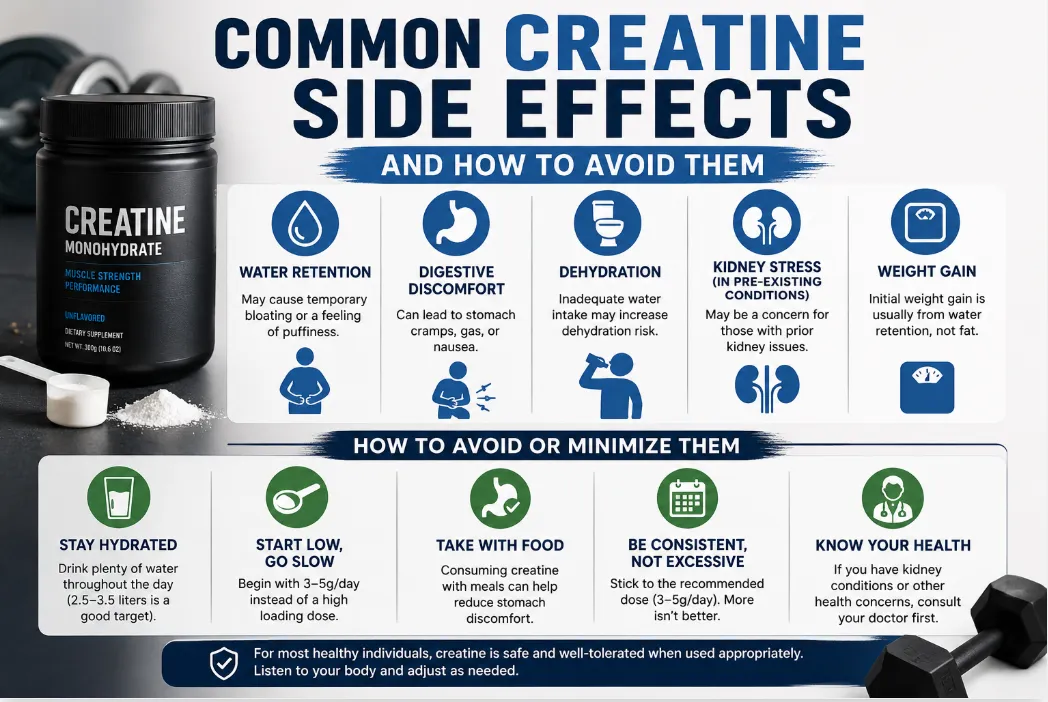
The good news is that most creatine side effects are either mild, temporary, or avoidable with proper use.
In this guide, we’ll explore the most common creatine side effects, what research says about them, and practical tips to help minimize potential issues while maximizing the benefits of supplementation.
What Is Creatine?
Creatine is a naturally occurring compound produced by the body from three amino acids:
-
Arginine
-
Glycine
-
Methionine
Approximately 95% of the body’s creatine is stored in skeletal muscles, where it helps support the production of adenosine triphosphate (ATP), the primary energy source used during high-intensity exercise.
Creatine is also found naturally in foods such as:
-
Beef
-
Pork
-
Salmon
-
Tuna
-
Herring
Because obtaining optimal amounts through food alone can be difficult, many individuals choose creatine supplements.
Is Creatine Safe?
Research consistently supports the safety of creatine when used according to recommended dosages.
Creatine is one of the most extensively studied supplements available, with numerous studies examining both short-term and long-term use.
For healthy individuals, creatine is generally considered safe and well tolerated.
However, some users may experience side effects, particularly when supplementation is not used properly.
Common Creatine Side Effects
1. Water Retention
Why It Happens
One of the most common effects of creatine supplementation is increased water retention within muscle cells.
Creatine helps draw water into muscles, which can contribute to:
-
Fuller-looking muscles
-
Temporary increases in body weight
-
Improved muscle hydration
Is It Dangerous?
No.
This effect is normal and often considered part of how creatine works.
How to Manage It
-
Stay hydrated
-
Follow recommended dosages
-
Avoid excessive loading protocols if water retention is a concern
For many users, water retention stabilizes after the initial supplementation period.
2. Temporary Weight Gain
Why It Happens
Many people notice a small increase in body weight after starting creatine.
This is often due to:
-
Increased muscle water content
-
Improved muscle hydration
It is important to understand that this initial weight gain is typically not body fat.
How Much Weight Gain Is Normal?
Individual responses vary, but some users may experience several pounds of temporary weight increase during the early stages of supplementation.
How to Manage It
-
Understand that temporary weight fluctuations are normal
-
Focus on body composition and performance rather than scale weight alone
3. Stomach Discomfort
Possible Symptoms
Some individuals experience:
-
Mild stomach upset
-
Nausea
-
Digestive discomfort
This is more common when large amounts of creatine are consumed at one time.
How to Avoid It
Use Recommended Dosages
Most healthy adults only require:
3–5 grams daily
Divide Larger Doses
If following a loading phase, spreading doses throughout the day may improve tolerance.
Take With Food
Many users find that taking creatine alongside meals reduces digestive discomfort.
4. Bloating
What Causes Bloating?
Some individuals report feelings of bloating when beginning creatine supplementation.
This is often related to:
-
Increased muscle water content
-
Digestive sensitivity
-
Large serving sizes
How to Reduce Bloating
-
Stay hydrated
-
Use smaller servings
-
Choose high-quality creatine monohydrate
-
Avoid excessive intake
For many users, bloating decreases as the body adapts.
5. Digestive Issues During Loading Phases
Why Loading Can Cause Problems
A traditional loading phase often involves:
20 grams daily
Divided into multiple servings.
While effective for rapidly increasing muscle creatine stores, larger intakes may increase the likelihood of digestive discomfort.
How to Avoid It
Consider:
-
Skipping the loading phase
-
Taking 3–5 grams daily instead
Research shows that long-term results are similar, although saturation occurs more gradually.
Creatine Myths vs Reality
Several misconceptions about creatine continue to circulate despite extensive scientific research.
Let’s examine the most common myths.
Myth #1: Creatine Causes Kidney Damage
What Research Says
For healthy individuals, research has not demonstrated that recommended creatine supplementation causes kidney damage.
Why does this myth exist?
Creatine supplementation can increase creatinine levels, a natural byproduct often measured during medical testing.
However, elevated creatinine resulting from supplementation does not automatically indicate kidney problems.
Individuals with existing kidney conditions should consult healthcare professionals before supplementation.
Myth #2: Creatine Causes Dehydration
Research Findings
Current evidence does not support the idea that creatine causes dehydration when users maintain proper fluid intake.
Hydration remains important for all athletes, regardless of supplementation.
Myth #3: Creatine Causes Muscle Cramps
What Studies Show
Scientific research has not consistently demonstrated an increased risk of muscle cramps among creatine users.
Many athletes successfully use creatine during intense training without experiencing cramping issues.
Myth #4: Creatine Is a Steroid
Reality
Creatine is not a steroid.
It is:
-
Naturally produced by the body
-
Found in foods
-
Legal
-
Extensively researched
Its mechanism differs entirely from anabolic steroids.
How to Avoid Creatine Side Effects
Fortunately, most potential side effects can be minimized through proper supplementation practices.
Follow Recommended Dosages
For most people:
3–5 grams daily
is sufficient.
Taking significantly more generally does not provide additional benefits.
Stay Hydrated
Water plays an important role in creatine supplementation.
Tips include:
-
Drinking fluids consistently throughout the day
-
Increasing intake during intense exercise
Use High-Quality Creatine
Creatine monohydrate remains the most researched and widely recommended option.
Look for products that offer:
-
Third-party testing
-
Transparent labeling
-
Quality manufacturing standards
Avoid Excessive Loading
Loading is optional.
Many users avoid digestive discomfort by simply taking a consistent daily serving.
Take Creatine Consistently
Regular supplementation supports stable muscle creatine stores and may help reduce fluctuations that sometimes occur with inconsistent use.
Who Should Consult a Healthcare Professional?
Although creatine is generally considered safe, certain individuals should seek medical advice before beginning supplementation.
These include people with:
-
Existing kidney disease
-
Chronic medical conditions
-
Specialized healthcare needs
Professional guidance can help ensure appropriate use.
Frequently Asked Questions
What Is the Most Common Side Effect of Creatine?
Water retention and temporary weight gain are among the most commonly reported effects.
Does Creatine Cause Bloating?
Some users experience mild bloating, particularly during the early stages of supplementation.
Can Creatine Upset Your Stomach?
Digestive discomfort can occur, especially when large doses are consumed at once.
Is Creatine Bad for Your Kidneys?
Research generally supports creatine’s safety in healthy individuals when used appropriately.
How Can I Avoid Creatine Side Effects?
Stay hydrated, use recommended dosages, choose quality products, and avoid excessive intake.
Final Thoughts
Creatine remains one of the safest and most effective sports nutrition supplements available today. While some users may experience mild side effects such as water retention, temporary weight gain, bloating, or digestive discomfort, these effects are generally manageable and often temporary.
Most concerns surrounding creatine—including kidney damage, dehydration, and muscle cramps—have been largely disproven by decades of scientific research involving healthy individuals. By following recommended dosages, maintaining proper hydration, and choosing high-quality creatine products, most users can enjoy the performance and training benefits of creatine while minimizing potential side effects.
For athletes, fitness enthusiasts, and beginners alike, understanding common creatine side effects can help ensure a more effective and comfortable supplementation experience.
