
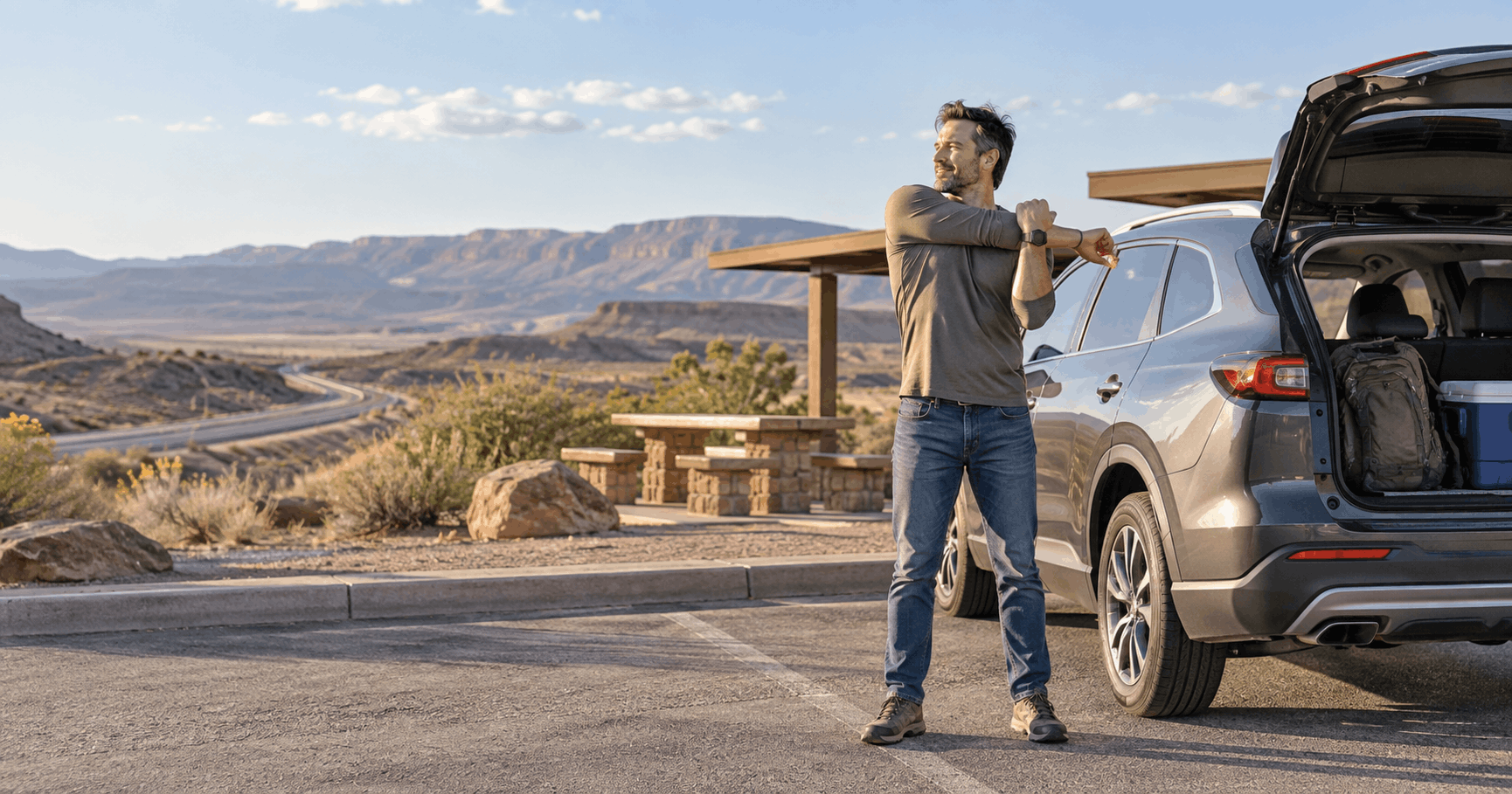
A long drive can sound relaxing when you are planning it. A few hours into the trip, however, your shoulders may start tightening, your lower back may feel stiff, and your legs may be ready for a break long before the fuel tank is empty.
The problem is not always the distance. Sitting in one position, gripping the steering wheel and making small corrections for several hours can leave your body feeling surprisingly worn out. Fortunately, a few changes can make a long day behind the wheel much more comfortable.
1. Adjust Your Seat Before You Leave
Many drivers position their seats for visibility but forget about posture. Your hips should sit as far back in the seat as possible, with the backrest supporting your lower and middle back.
Move the seat close enough that you can press the pedals without fully straightening your leg. When holding the steering wheel, your elbows should remain slightly bent rather than locked.
If your vehicle does not provide enough lower-back support, try a small lumbar cushion or a rolled towel. The goal is to support the natural curve of your lower back without forcing you forward.
2. Empty Your Back Pockets
A wallet, phone or set of keys in a back pocket can tilt one side of your pelvis while you are sitting. You may not notice the uneven position during a short commute, but it can become uncomfortable during a four- or five-hour drive.
Move bulky items into the center console, glove compartment or a travel bag before leaving. It is a small adjustment that can make a noticeable difference by the end of the day.
3. Plan Breaks Before You Need Them
Drivers often wait until they are already uncomfortable before stopping. A better strategy is to plan a short break approximately every 90 minutes to two hours.
You do not need a long interruption. Five or ten minutes outside the vehicle gives you an opportunity to walk, straighten your legs and change position. It also helps with alertness, especially on long stretches of highway where the scenery and driving conditions barely change.
Stopping briefly may add a few minutes to the trip, but it is usually easier than trying to recover after several uninterrupted hours in the seat.
4. Use Rest Stops to Move, Not Just Refuel
Walking from the gas pump to the register is better than nothing, but a little intentional movement can help loosen the areas that tend to tighten while driving.
Try a few gentle movements while safely parked:
-
Walk around the parking area for several minutes.
-
Roll your shoulders forward and backward.
-
Gently turn your upper body from side to side.
-
Bend and straighten each knee.
-
Stretch one calf at a time against a curb or stable surface.
-
Reach overhead while taking several slow breaths.
Avoid aggressive stretching when your muscles are cold. The objective is simply to restore movement and circulation before returning to the vehicle.
5. Stay Hydrated Without Overdoing the Caffeine
It is easy to rely on coffee and energy drinks during a road trip. A moderate amount of caffeine may help with alertness, but it should not replace water, food or proper rest.
Keep water within reach and sip it throughout the trip. Pack simple snacks that will not leave you feeling overly full or sluggish. Fruit, nuts, sandwiches and protein-rich snacks are usually easier on the road than one oversized meal.
Most importantly, caffeine is not a substitute for sleep. If you are struggling to stay awake, find a safe place to stop.
6. Relax Your Grip and Check Your Shoulders
Many people gradually tighten their grip on the steering wheel without realizing it. Their shoulders creep upward, their jaw tightens, and the tension spreads into the neck and upper back.
Every so often, check your posture. Lower your shoulders, loosen your grip and let the seat carry more of your weight. Keep both hands positioned safely on the wheel, but avoid squeezing it harder than necessary.
You can also change your hand position occasionally as long as you maintain proper control of the vehicle.
7. Save Cooling or Warming Topicals for When You Are Parked
Some drivers keep a topical product in their travel bag for use after reaching the hotel, campsite or final destination. Cooling roll-ons are convenient because they can be applied directly to areas such as the shoulders, lower back or knees without getting cream on your hands.
For example, the Quiet Monk CBD roll-on combines a portable roller format with a cooling topical sensation. It is better suited to a post-drive routine than something you would try to apply while operating a vehicle.
Always read the product label, use only as directed and wash your hands if necessary before touching your eyes. Never attempt to apply a topical while the vehicle is moving.
CBD also deserves a driving-safety distinction. CBD itself is not considered intoxicating, but products vary, and some people may experience drowsiness from CBD products—particularly ingestible products. Some formulas may also contain measurable THC. Check the laboratory report and never drive after using anything that affects your alertness, judgment or coordination.
8. Pay Attention to Pain That Does Not Settle Down
Ordinary stiffness from sitting often improves after walking, changing position or getting a good night’s rest. Persistent or severe pain deserves more attention.
Contact a healthcare professional if the discomfort continues, becomes progressively worse or is accompanied by numbness, tingling, weakness, fever or pain traveling down a leg. Those symptoms should not simply be blamed on a long day of driving.
If you regularly use portable topicals after physical activity or travel, this guide to comparing roll-on muscle relief gels explains what to consider when looking at ingredients, application style and product strength.
A More Comfortable Road Trip Starts Before the Engine
The best time to prepare for a comfortable drive is before you pull onto the highway. Set up the seat properly, remove anything from your back pockets, pack water and schedule realistic breaks.
Once you arrive, give yourself a few minutes to walk and loosen up before unloading the vehicle or settling in for the night. Long drives may still leave you tired, but they do not have to leave your entire body feeling like it traveled in the trunk.
